
Quick Answer: Gamification in health and fitness means applying game mechanics, points, levels, streaks, leaderboards, and challenges, to exercise, nutrition, and recovery to make consistency easier to sustain. The research is genuinely mixed: gamification reliably increases physical activity and engagement in the short term, but its effect on deeper, long-term motivation depends entirely on which mechanics are used and how they’re designed. Points and badges alone are weak. Leaderboards can demotivate as easily as they motivate. Streaks can backfire into all-or-nothing quitting. What separates gamification that actually changes behavior from gamification that’s just decoration is whether the system taps real psychological needs, competence, autonomy, and relatedness, instead of just tracking numbers. This post is the hub for that whole conversation; each section below links out to a deeper dive.
What Is Gamification in Health and Fitness, Exactly?
Gamification is the use of game design elements, points, levels, badges, streaks, leaderboards, challenges, in a context that isn’t actually a game. In fitness specifically, that means turning workouts, runs, and nutrition tracking into something with visible progress, competition, and reward, instead of a private, invisible habit that only you know you’re keeping (or not keeping).
It’s not a new idea. Fitness apps have leaned on gamification for over a decade, step counters with badges, running apps with segment leaderboards, nutrition apps with streak counters. What’s changed is how much research now exists on which parts of that formula actually work.
Does Gamification Actually Work? What the Research Says
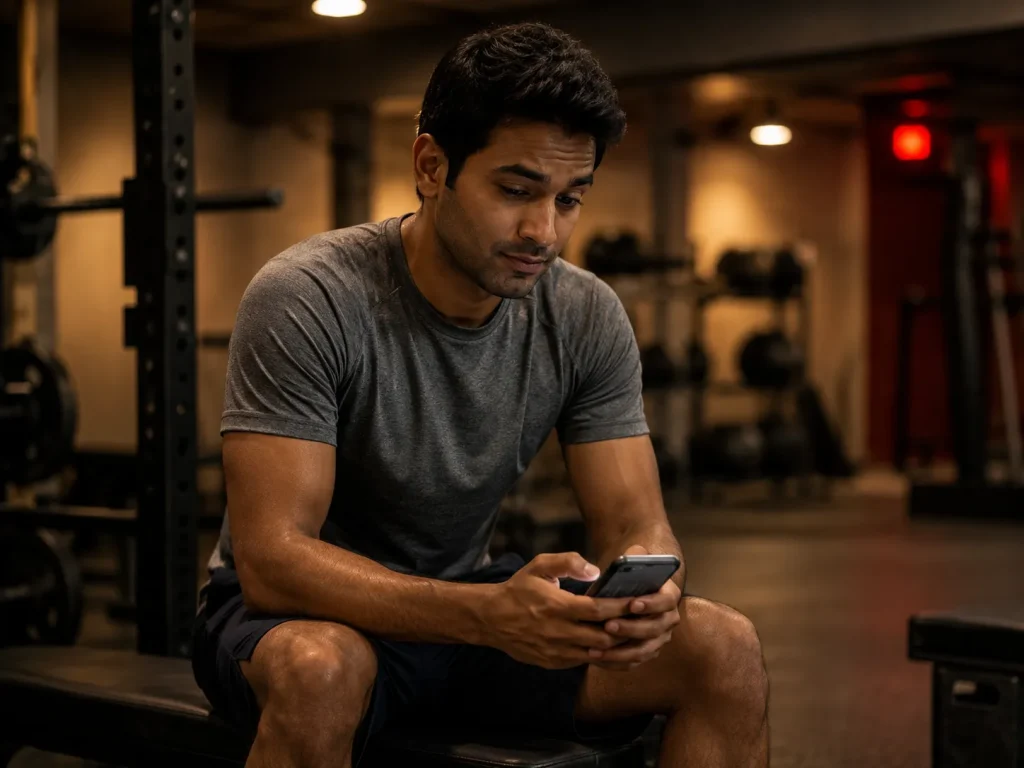
The honest answer is: it depends which layer of “gamification” you’re talking about.
A systematic review of mobile-health gamification interventions covering physical activity participation found consistent evidence that gamified interventions increase physical activity engagement compared to non-gamified alternatives, while also noting that the field still needs higher-quality studies on exactly which combinations of game elements work best. A separate literature review on gamification for health and wellbeing found the approach has broad applicability, it’s been used successfully across physical activity, diet management, medication adherence, and chronic disease care, precisely because it’s often cheaper and faster to add a “game layer” to an existing habit-tracking system than to build a dedicated behavior-change program from scratch.
But there’s a catch, and it’s an important one. A widely cited review of gamified health and fitness apps found that despite gamification becoming extremely common across the app store, most of these apps show little integration of actual behavioral-change theory, they add points and badges without grounding them in the psychological mechanisms that make behavior change stick. In other words: gamification is popular, but a lot of it is gamification in name only.
The Psychology Underneath It: Why Some Gamification Works and Some Doesn’t
The research keeps pointing back to the same explanation. Self-Determination Theory (SDT), the framework behind competence, autonomy, and relatedness as the three core drivers of sustained motivation, shows up across nearly every serious study of gamified health behavior. Systems that only track a number (steps, points, calories) speak to competence at best, and often not even that, since a raw number without context doesn’t tell you whether you’re actually improving relative to your own history or your peers.
Deep dive: Fitness Gamification Psychology covers this in full, including why points and badges alone tend to lose their motivational pull once the novelty wears off, and what actually sustains engagement past week three.
Streaks: A Powerful but Fragile Mechanic

Streaks are one of the most effective and most misunderstood gamification tools in fitness. Loss aversion, the pain of losing something you’ve built feeling stronger than the pleasure of gaining it, makes a 20-day streak far more motivating to protect than a blank slate ever was. But rigid daily streaks have a documented failure mode: they can’t distinguish between “I gave up” and “I was sick, traveling, or injured,” and both get punished identically. That’s a major reason streak-based habits collapse the moment life gets complicated.
Deep dive: Why Workout Streaks Work covers the fresh-start effect and why a weekly reset structure can outperform a rigid daily one.
XP and Point Systems: Why the Underlying Math Matters
Points and experience systems are the most visible layer of fitness gamification, but not all point systems are built the same way. A system that tracks lifting, running, and nutrition as three separate, disconnected scores is really running three small games in parallel, and a bad week in one doesn’t help or hurt the others. A unified score, where consistency in one area can offset a rough week in another, reflects how real training actually works: nobody performs at 100% across every category every single week.
Leaderboards: The Mechanic That Cuts Both Ways
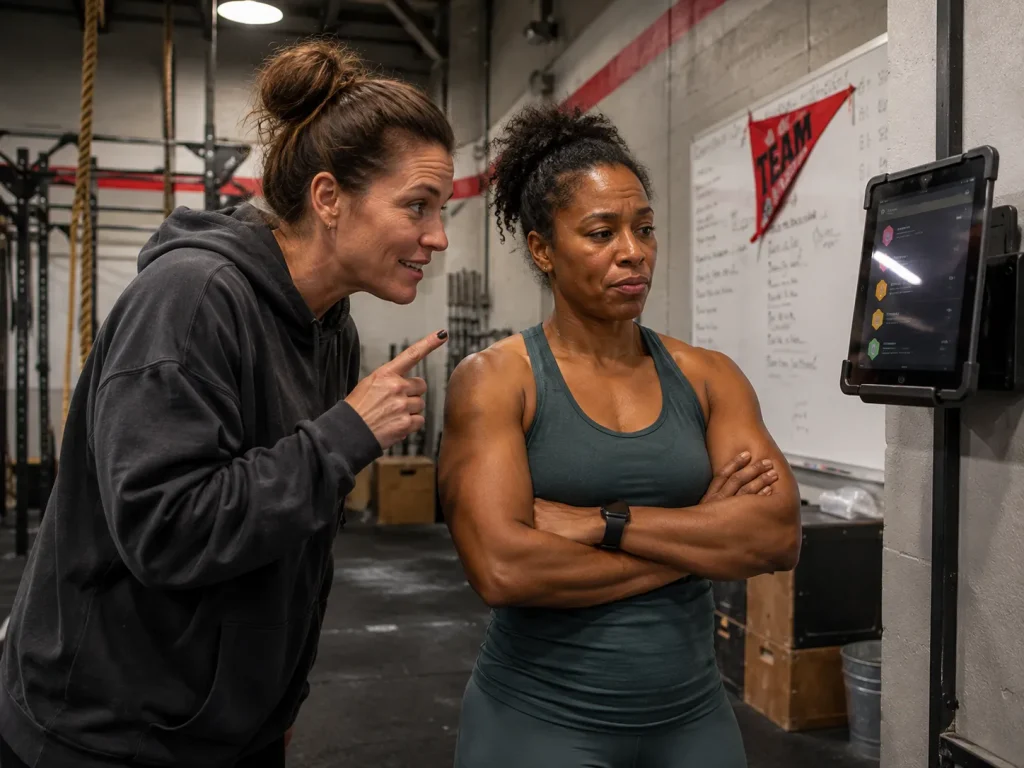
Two women reacting differently to a gym leaderboard tablet, showing the double-edged nature of gamification in health and fitness
Leaderboards are gamification’s highest-risk, highest-reward tool. Done well, they tap relatedness and competence at once, you can see exactly where you stand, and you’re not training in a vacuum. Done poorly, a single global leaderboard motivates the top few percent and quietly demoralizes everyone below the middle, since there’s no way to ever meaningfully close the gap with someone who’s been training for a decade.
Where Gamification Fails: The Honest Downsides
A pillar post that only lists benefits isn’t a trustworthy one. The research on gamification ethics is worth taking seriously: reviews of gamified health and fitness apps have flagged real concerns, including designs that lean on psychological triggers without transparency, systems that shift focus from genuine enjoyment of activity toward simply completing reward loops, and risks around overuse or unhealthy dependency on the app itself rather than the underlying habit. None of that means gamification is bad. It means gamification designed only around engagement metrics, more opens, more streaks, more notifications, without regard for whether it’s actually serving the person’s wellbeing, is a real design failure mode, not a hypothetical one.
The takeaway for evaluating any gamified fitness app, including this one: the mechanics should point back toward genuine consistency and competence, not toward compulsive app-checking for its own sake.
How Rival Fit Applies All of This
Most competing apps treat streaks, points, and leaderboards as separate, bolted-on features. Rival Fit’s actual design starts from the research above, not from “let’s add a leaderboard because competitors have one.”
Join → Earn → Climb, the same three-step structure across every part of the product:
- Join Your State League — signup places you in your state’s competitive pool, starting in Tier C, a group sized to your actual level, not the entire internet.
- Earn Unified XP — one combined score across lifting, running, and nutrition discipline, so the system reflects the whole picture of your training instead of three disconnected numbers.
- Climb the Ranks — a weekly Monday reset gives everyone a genuine fresh start instead of an unbroken, punishing daily chain, while Prestige progression preserves your long-term record underneath it, so a rough week doesn’t erase months of consistency.
That structure is a direct answer to the research above. The fresh-start-effect research behind the Monday reset addresses the streak-backfire problem. The competence-through-context research behind Unified XP addresses why raw point totals alone don’t sustain motivation. And ghost rank, competing against your own past performance instead of a stranger, addresses the leaderboard-demotivation problem directly, particularly for anyone starting from zero.
Who Gamification Actually Works For

Fitness gamification research increasingly points toward accessibility as a design factor, not an afterthought. A recent systematic review of gamification in the fitness industry specifically flagged improved accessibility for older adults as a documented benefit when interfaces are kept simple and clear. That matters directly here: Rival Fit’s stated audience is Athletes, Trainers, and Seniors 60+, not just competitive lifters, and the Free Agent tier paired with ghost rank is built as a non-intimidating entry point for exactly that broader group, competing against your own history first, the wider league second.
For trainers and gym operators, the same underlying research applies from the other direction: gamified engagement tools reduce the burden of manually tracking client consistency, which is what the Trainer Command Center is built to handle, program building, client management, and status tracking from a single dashboard.
FAQ
Does gamification actually improve health and fitness outcomes?
Research shows gamification reliably increases physical activity engagement, especially in the short to medium term. Long-term effects depend heavily on which specific mechanics are used, systems built around real psychological needs (competence, autonomy, relatedness) hold up better than ones relying on points and badges alone.
What are the downsides of gamified fitness apps?
Documented concerns include designs that exploit psychological triggers without transparency, a shift from genuine enjoyment toward compulsive reward-chasing, and risks of overuse or unhealthy dependency, especially when an app prioritizes engagement metrics over user wellbeing.
Is gamification effective for older adults?
Yes, research specifically flags improved accessibility for older adults when gamified interfaces are kept simple and clear, making it one of the better-supported use cases in the literature, not a niche one.
What makes one gamified fitness app different from another?
Whether the mechanics are unified or siloed. Apps that treat points, streaks, and leaderboards as separate features tend to under-deliver on long-term motivation. Systems that combine them into one coherent structure, tied to real competence and fair comparison, tend to hold up better.