
QUICK ANSWER: Most team fitness challenge apps, GymRats, Baton, BEAST UP, Wette, Big Team Challenge, TeamPulse, score one metric: steps, workout count, or miles. That works fine if your whole team trains the same way. It falls apart the moment your group has a lifter, a runner, and someone focused on hitting protein goals every day, since a single-metric leaderboard can’t fairly rank three different kinds of effort. The apps that hold up longest combine multiple training types into one score and run on a recurring structure instead of a fixed start and end date.
Team Fitness Challenge App Options: 8 Compared (And Where Each One Falls Short)
Search “team fitness challenge app” and you’ll mostly find two categories. The first is corporate step-counting platforms built for HR wellness budgets. The second is casual group-challenge apps that track a single number, workouts logged, miles run, or streak days.
Both work, for a while. The real test comes a few weeks in, once your team actually reflects how people train. A step-count app can’t fairly score a lifter chasing a deadlift PR. A workout-count app rewards whoever shows up most often, not whoever trains smartest.
We compared eight real team fitness challenge apps against that exact problem, plus the actual research on why training as a team beats training alone in the first place.
Why Do Team Fitness Challenges Actually Work?
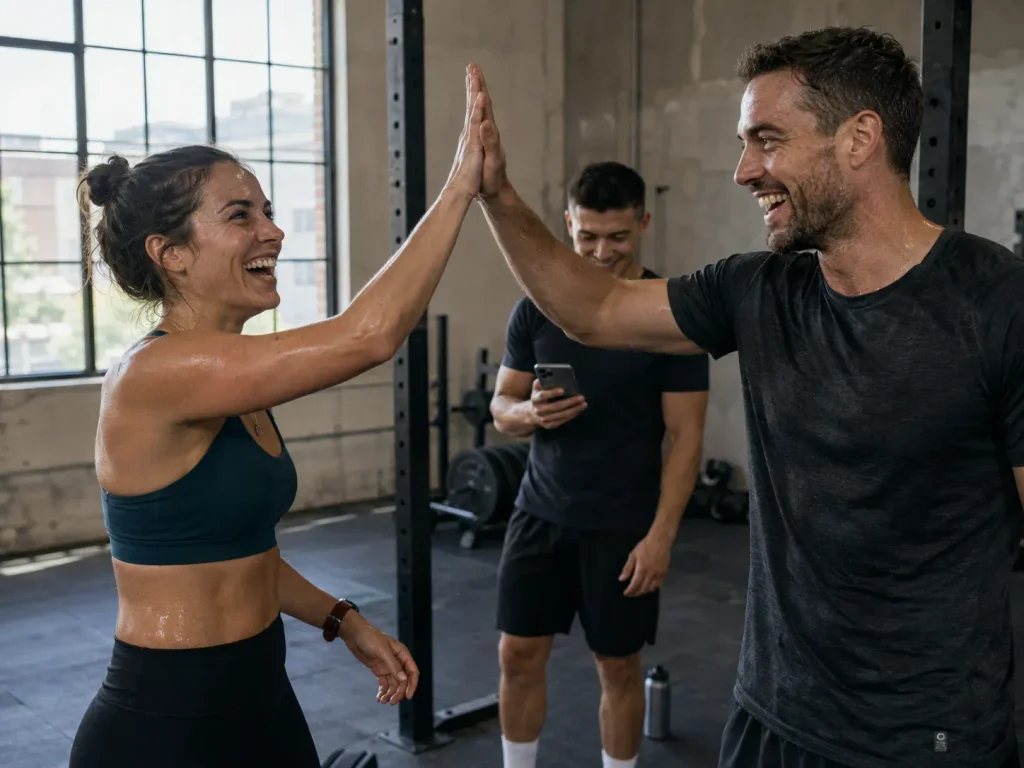
Team-based training holds up because the accountability is visible to other people, not just to you. A factorial-design feasibility study comparing team-based and solo conditions in a mobile fitness and nutrition app found participants in team conditions were 66% more likely to stay engaged over the study period than those working solo. The team structure itself, not any single feature, was the variable driving the difference.
That effect scales past small friend groups too. A UniSA-led analysis of a six-week gamified team-based workplace program, covering more than 11,500 participants across roughly 70 companies, found 95% of volunteers met or exceeded WHO physical activity guidelines by the end, alongside measurable gains in fitness, energy, and mood. The mechanic behind it wasn’t a single leaderboard, it was daily team competition combined with visible tracking.
What Should You Actually Look For in a Team Fitness Challenge App?
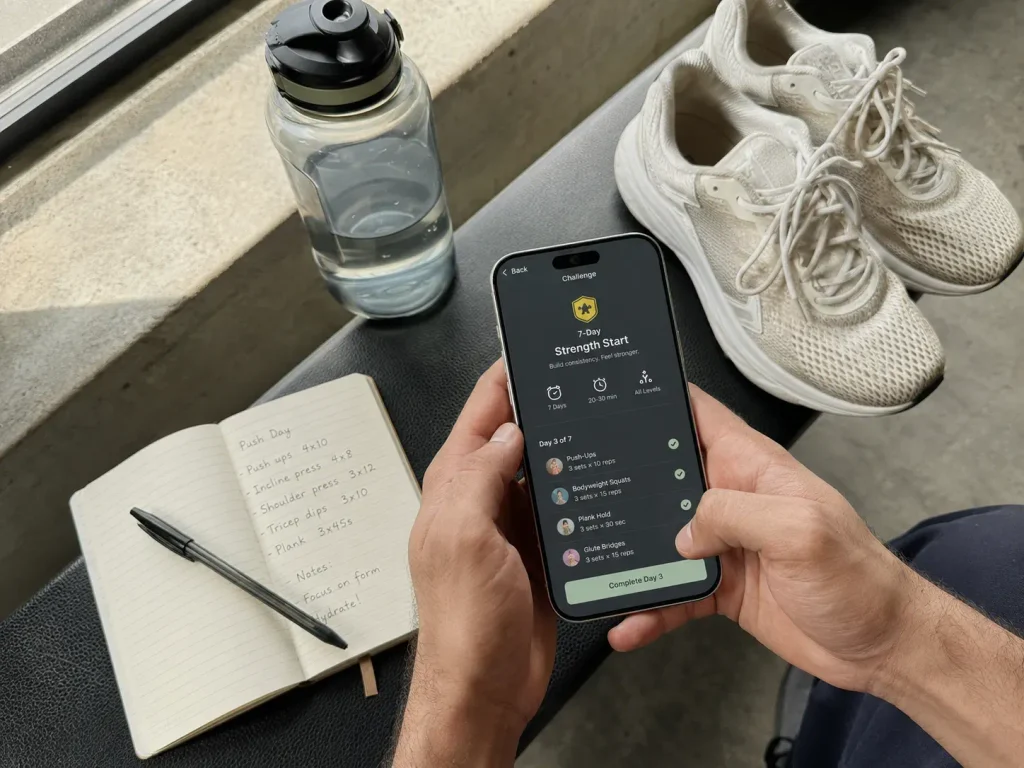
Before comparing specific apps, it helps to know what actually separates the ones that last from the ones your group abandons after week two.
- Scoring that works across training types. A lifter, a runner, and someone tracking macros should all be able to contribute to the same score without one metric drowning out the others.
- A recurring structure, not a fixed end date. Challenges with a hard finish line tend to fizzle right after it, since there’s nothing to compete for the following week.
- Fairness across fitness levels. A beginner and a five-year gym veteran need a format where relative progress counts, not just raw output.
- Accountability features that are actually visible, like a real-time leaderboard, group chat, or activity feed, not just a private log only you can see.
- Simple enough for the whole group, including less tech-savvy or older members, not just the most competitive person on the team.
The Best Team Fitness Challenge Apps, Compared
| App | Built For | Scoring Metric | Structure | Where It Falls Short |
| GymRats | Friends, gyms, informal teams | Configurable: workouts, miles, minutes, calories, steps, or custom points | Free-form group challenge, fixed length | The whole group picks one metric upfront, so a lifter and a runner still compete on the same single number |
| Baton | Running and workout groups | One collective distance or time goal | Relay-style, everyone contributes to a shared total | Built around one shared goal, not an individual comparative ranking across training types |
| BEAST UP | Friend groups (“Beastbubble”) | Workouts completed or weekly goals hit | Repeating weekly challenges | Rewards workout frequency, not a combined lifting, running, and nutrition score |
| Wette | Friend groups, gyms | Gym attendance or goal completion, AI photo-verified | Fixed-length challenge | Strong on accountability and cheat-proofing, but no unified score across disciplines |
| Big Team Challenge / TeamPulse | Corporate wellness programs | Steps or activity minutes, synced from wearables | Fixed-length organizational event | Built for HR wellness budgets, employer-gated signup, not gym friend groups |
| Fitness Leaderboard | Friends, family, corporate teams | Steps, workouts, or calories via Apple Health | Custom daily, weekly, or monthly challenges | Tracks one metric at a time, so mixed-training groups still can’t compete evenly |
| Rival Fit (Custom Leagues) | Athletes, trainers, gym groups, ages 60+ | Unified XP: lifting, running, and nutrition combined into one score | Custom Leagues and League vs League, with a weekly Monday reset | Newer platform, still in beta, so it has fewer years of track record than the established apps above |
Every app on this list solves accountability in its own way. Only one folds lifting, running, and nutrition into a single combined score instead of asking your group to agree on one metric before you even start.
Where Most Team Challenge Apps Fall Short
The pattern across most of the field is a single-metric bias. Steps, workout counts, or one shared distance goal are easy to build and easy to understand, but they only reward one kind of effort, a real design tradeoff, not a minor limitation, since it decides who your app is actually fair to.
The corporate wellness apps have a second problem: they’re gated behind an employer or HR program, a poor fit for a gym friend group with no company wellness initiative behind it.
And most single-challenge apps end when the challenge does. Our deep dive on fitness challenges that actually work covers why a fixed-length challenge tends to lose steam the moment it wraps, and what keeps a competition going past its first cycle. The leaderboard fairness problem, specifically why a flat leaderboard demotivates people who aren’t near the top, is covered in more depth in fitness leaderboard psychology.
How Rival Fit’s Custom Leagues Solve the Cross-Training Problem
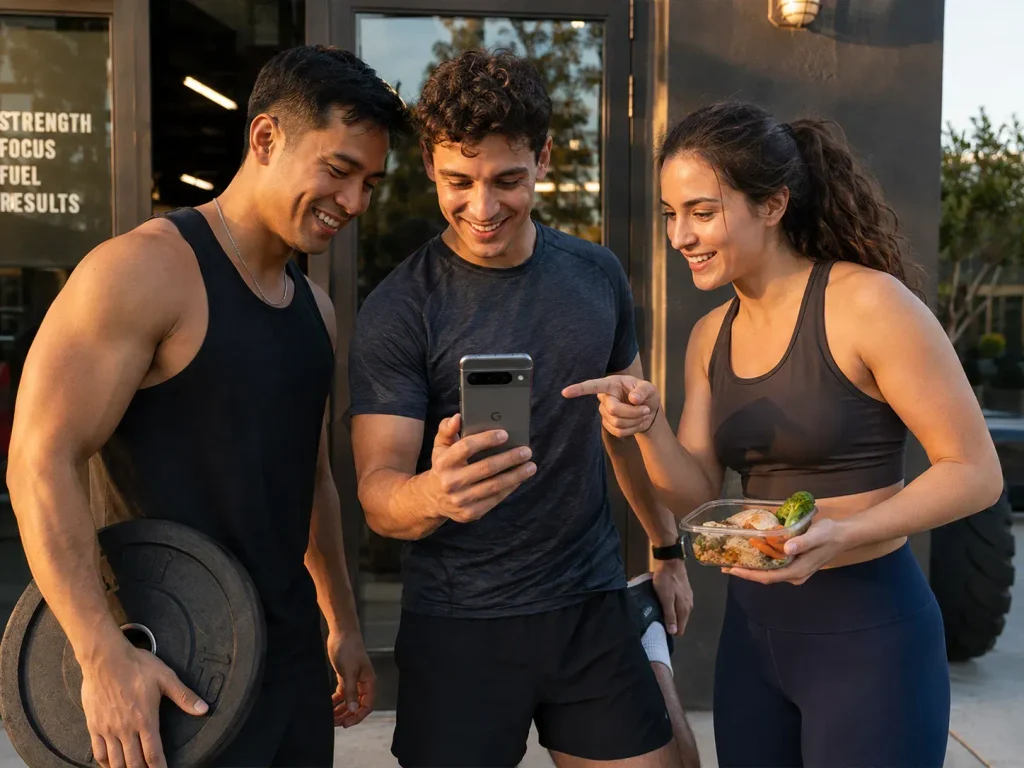
Rival Fit’s Custom Leagues were built around the same Join → Earn → Climb structure that runs through the whole platform:
- Join Your State League — signup places you in your state’s pool, starting in Tier C.
- Earn Unified XP — one combined score balances lifting, running, and nutrition discipline, so a lifter and a runner contribute to the same score instead of competing on separate ones.
- Climb the Ranks — a weekly Monday reset gives every team a genuine fresh start, instead of a single fixed challenge window that ends and takes the motivation with it.
League vs League takes a Custom League further: instead of a one-time group chat challenge, your team runs a structured, ongoing competition against another group, with a real leaderboard tracking who’s ahead each week. That’s the same underlying fix we cover in how to compete with friends at the gym, applied at the team level instead of the head-to-head one.
Who a Team Competition League Actually Works Best For
Rival Fit’s stated audience is Athletes, Trainers, and Seniors 60+, and that shows up directly in how Custom Leagues are meant to be used. A competitive team of lifters and runners gets a fair combined score instead of a single metric that favors whoever’s fastest. A less competitive or older team member gets the Free Agent tier and ghost rank, competing against their own past performance first, so they’re not thrown straight into a leaderboard built for the most intense person in the group.
For trainers and gym operators running a challenge across an entire membership base, the Trainer Command Center handles program building and client tracking from one dashboard, which matters once “team” means dozens of members instead of a handful of friends.
Frequently Asked Questions
What’s the best team fitness challenge app for a group with different fitness levels?
Look for an app that scores multiple training types together instead of one metric alone. A combined score, covering lifting, running, and nutrition, lets a beginner and an experienced athlete compete on relative progress instead of raw numbers.
Are workplace wellness challenge apps good for friend groups outside of work?
Not usually. Apps like Big Team Challenge and TeamPulse are built for HR-run programs and often require an employer or organization to set up the challenge, which makes them a poor fit for an independent gym group or friend circle.
Do team fitness challenges need a fixed end date?
No, and fixed-length challenges are actually where most of them lose momentum. A recurring structure with regular resets keeps a rivalry going far longer than a single challenge that ends and has nothing to replace it.
Can beginners compete on a team with more experienced athletes?
Yes, in the right format. Tiered systems and ghost rank, comparing your own progress over time rather than raw totals against a stranger, let beginners compete fairly without needing to match a more experienced teammate’s numbers.
What’s the difference between a team fitness challenge app and a fitness leaderboard app?
A challenge app usually centers on a specific, often time-limited event. A leaderboard app is built around ongoing ranking. The apps that combine both, a real leaderboard plus a recurring challenge structure, tend to hold a group’s attention the longest.
The Bottom Line
Most team fitness challenge apps solve accountability well and scoring fairness poorly. Pick one built around a single metric and you’re fine as long as your whole group trains the same way. The moment your team has a lifter, a runner, and someone tracking nutrition, you need a combined score and a structure that doesn’t end the moment the challenge does.
Ready to give your gym crew a scoring system built for how you actually train? Claim your spot and set up your first Custom League when your state’s season opens.