
Quick Answer: Hitting your protein goal every day comes down to a handful of habits: front-loading protein at breakfast, dividing your target across your meals instead of saving it for dinner, keeping high-protein snacks stocked, and tracking your actual numbers instead of guessing. Below are 10 practical strategies, plus what the research says about whether timing your protein intake actually matters.
Protein is consistently the macro people miss, even when they’re hitting their overall calorie target just fine. It’s not that protein is complicated, it’s that most meals default to carbs and fat unless you deliberately build them around a protein source first. A day can feel like it went well and still land 40 or 50 grams short of target, usually because breakfast and lunch quietly skipped it.
Why Is Protein the Hardest Macro to Hit Every Day?
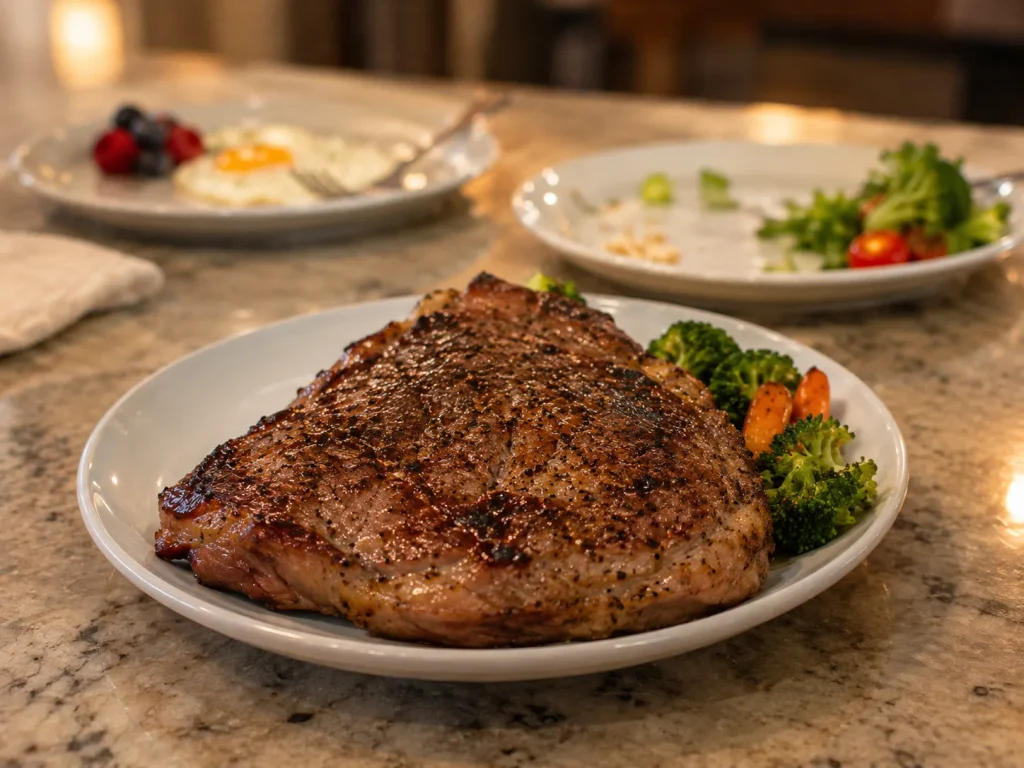
Carbs and fat show up almost automatically in a normal day, bread, oil, snacks, dressings. Protein doesn’t. It has to be planned for, which means the default eating pattern for most people is protein-light until dinner, when a bigger meat portion finally shows up. By then, you’re trying to cram half your daily target into one sitting, which is both harder to do and less useful than spreading it out, more on that below.
10 Ways to Hit Your Protein Goal Every Day
- Start with a protein-forward breakfast. Eggs, Greek yogurt, cottage cheese, or a protein shake at the first meal of the day sets the tone, and it’s the single easiest miss to fix since most default breakfasts (cereal, toast, coffee) are protein-light.
- Divide your goal by your number of meals. If your target is 150 grams and you eat four times a day, that’s roughly 35-40 grams per meal. Having a per-meal number makes the daily goal far less abstract than trying to hit one big total at the end of the day.
- Build the meal around the protein, not around everything else. Pick the protein source first, then add carbs and vegetables around it, instead of planning a meal and treating protein as an afterthought.
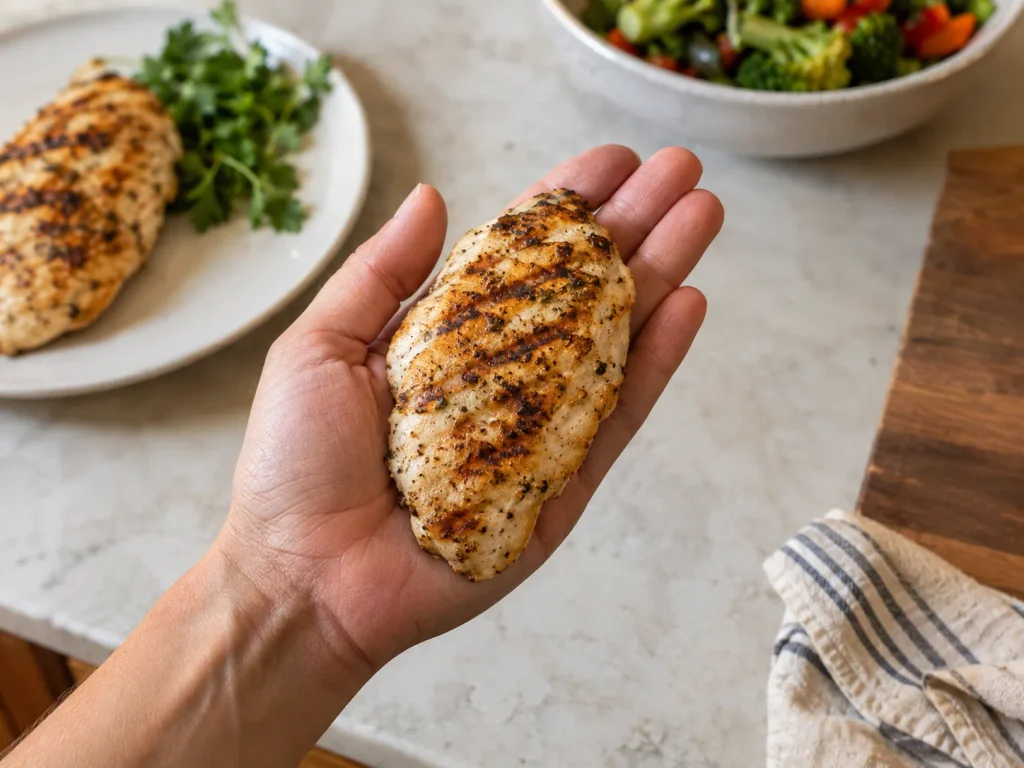
- Use the palm rule when you can’t weigh food. A palm-sized portion of meat, poultry, or fish is roughly 20 to 30 grams of protein, a workable estimate for meals out or days when a food scale isn’t practical.
- Keep high-protein snacks stocked and ready. Greek yogurt, string cheese, hard-boiled eggs, jerky, or a protein bar in easy reach means the midday gap gets filled with protein instead of whatever’s closest.
- Batch cook two or three protein sources at the start of the week. Grill or bake a big batch of chicken, ground turkey, or tofu once, and portioning it into meals for the rest of the week takes the decision-making out of busy days.
- Front-load your day instead of saving protein for dinner. Getting ahead early means one lighter dinner doesn’t blow the whole day’s target, since you’re not depending on a single large meal to cover most of it.
- Use a protein shake as a backup, not a replacement. A shake is a fast way to close a 20-30 gram gap at the end of the day, but it works best as a supplement to real meals rather than a stand-in for most of your intake.
- Log protein even on days you skip everything else. If tracking every macro feels like too much on a given day, protein is the one worth keeping up with regardless, since it’s the macro most tied to body composition results.
- Track your actual numbers instead of estimating. Most people assume they’re closer to their protein goal than they actually are. A few days of real tracking usually reveals exactly where the gap is, breakfast, snacks, or both.
Does It Matter When You Eat Your Protein?
Yes, and it’s one of the more consistently replicated findings in protein research. A controlled feeding study comparing an even protein distribution across breakfast, lunch, and dinner against a distribution skewed toward dinner found that muscle protein synthesis over 24 hours was roughly 25% higher with the evenly spread pattern, even though total daily protein intake was identical in both groups. The likely explanation is that muscle protein synthesis responds to a per-meal threshold, roughly 25 to 40 grams of quality protein, and a meal below that threshold doesn’t trigger much of a response no matter how much protein shows up later in the day.
In practical terms, that means a 20-gram breakfast, a 25-gram lunch, and a 90-gram dinner isn’t the same as three 45-gram meals, even though the daily total is similar. Spreading the target out isn’t just easier to plan around, it appears to be the more effective pattern too.
| Skewed Toward Dinner | Evenly Distributed | |
| Breakfast | ~10-15g protein | ~35-40g protein |
| Lunch | ~15-20g protein | ~35-40g protein |
| Dinner | ~90-100g protein | ~35-40g protein |
| Muscle protein synthesis response | Lower, one large meal exceeds the per-meal threshold with diminishing returns | Higher, each meal individually crosses the threshold |
How Rival Fit Makes Hitting Your Protein Goal Part of Training

Most of the strategies above rely on you noticing the gap yourself, which is exactly where tracking tends to fall apart. Rival Fit’s Macros & Nutrition tracking closes that gap by feeding your logged protein directly into your Unified XP System alongside your lifting and running, so a consistent protein day contributes to your standing the same way a solid workout does.
That’s useful for the exact problem strategy 10 above describes: instead of vaguely assuming you’re “probably close” to your protein goal, a missed day shows up in that week’s Unified XP total, not just a food diary nobody else checks. If you’re still working out your baseline calorie and macro targets before dialing in protein specifically, our beginner’s guide to tracking macros covers that groundwork first.
Frequently Asked Questions
How much protein should I actually be eating per day?
It depends on your goals and bodyweight, but a common starting range for people focused on body composition is 0.7 to 1 gram of protein per pound of bodyweight daily.
Is it bad to eat most of my protein at dinner?
It’s not harmful, but research suggests it’s less effective for muscle protein synthesis than spreading the same total protein evenly across meals throughout the day.
What’s the easiest meal to add protein to?
Breakfast, by a wide margin. Most default breakfast foods are protein-light, so even a small addition, eggs, Greek yogurt, or a protein shake, closes a meaningful part of the daily gap.
Do protein shakes count toward my daily protein goal?
Yes. A shake’s protein counts the same as protein from food. It’s best used to fill a specific gap rather than replacing whole meals on a regular basis.
How many grams of protein can my body actually use in one meal?
Muscle protein synthesis appears to plateau somewhere around 25 to 40 grams of high-quality protein per meal. Additional protein beyond that in a single sitting still counts toward your daily total, but it doesn’t add much extra muscle-building benefit in that specific meal.
The Bottom Line
Hitting your protein goal every day isn’t about one clever trick, it’s about a handful of small habits: a protein-forward breakfast, a per-meal target instead of one big daily number, stocked snacks, and tracking so the gap is visible instead of assumed. The timing research adds one more reason to spread it out rather than saving it all for dinner.
Rival Fit’s Macros & Nutrition ties that daily protein habit directly into your Unified XP, so hitting your protein goal moves your standing the same way a heavy lift does. Claim your spot and make your protein count for something beyond a diary entry.