
Quick Answer: An XP system in a fitness app assigns points to workouts, runs, or meals so effort becomes a visible, trackable number instead of a private log. Most apps stop at a single flat counter, which is why the motivation fades fast. Rival Fit’s Unified XP goes further, combining lifting, running, and nutrition discipline into one score that moves you through your State League tiers.
You’ve probably seen an XP counter in a fitness app before. You finish a workout, a number ticks up, a progress bar fills in, and it feels good for about a day. Then it stops meaning anything. That’s the version of gamification most people have already tried and quietly abandoned.
An XP system for fitness explained properly isn’t a counter bolted onto a workout log. It’s a scoring system built to answer one question: is your training actually adding up to something? This post breaks down what an XP system is, the psychology behind why it works, where most apps get it wrong, and how Rival Fit’s Unified XP ties lifting, running, and nutrition into one score that puts you on a real leaderboard.
What Is an XP System in a Fitness App?
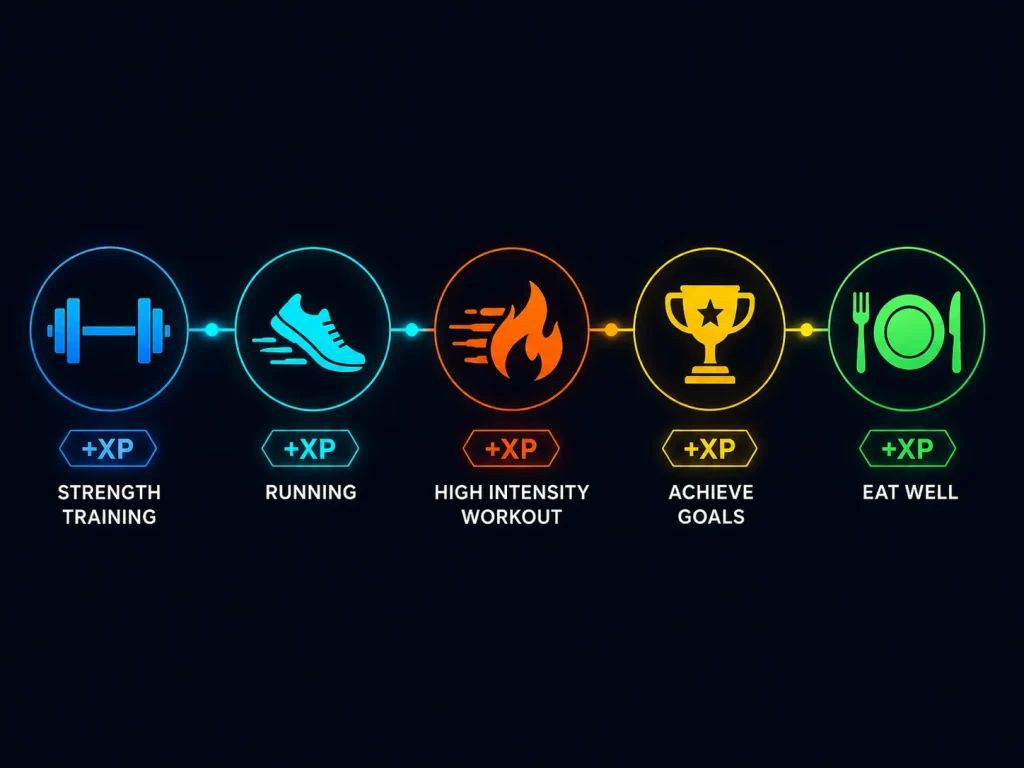
An XP system awards experience points for specific fitness actions, then totals them into a running score you can watch grow. The point isn’t the number itself, it’s what the number represents: proof that the work happened.
Most XP systems reward a mix of these actions:
- Completing a logged workout
- Hitting a distance or pace goal on a run
- Extending a daily or weekly streak
- Setting a personal record
- Hitting a nutrition target
In Rival Fit, that activity gets captured through the Workout Journal for sets, supersets, and PRs, and the Runner Log for GPS-tracked pace and splits. The XP itself is what turns that raw activity into something comparable across a leaderboard, not just a private history.
How Does Earning XP Actually Motivate You?
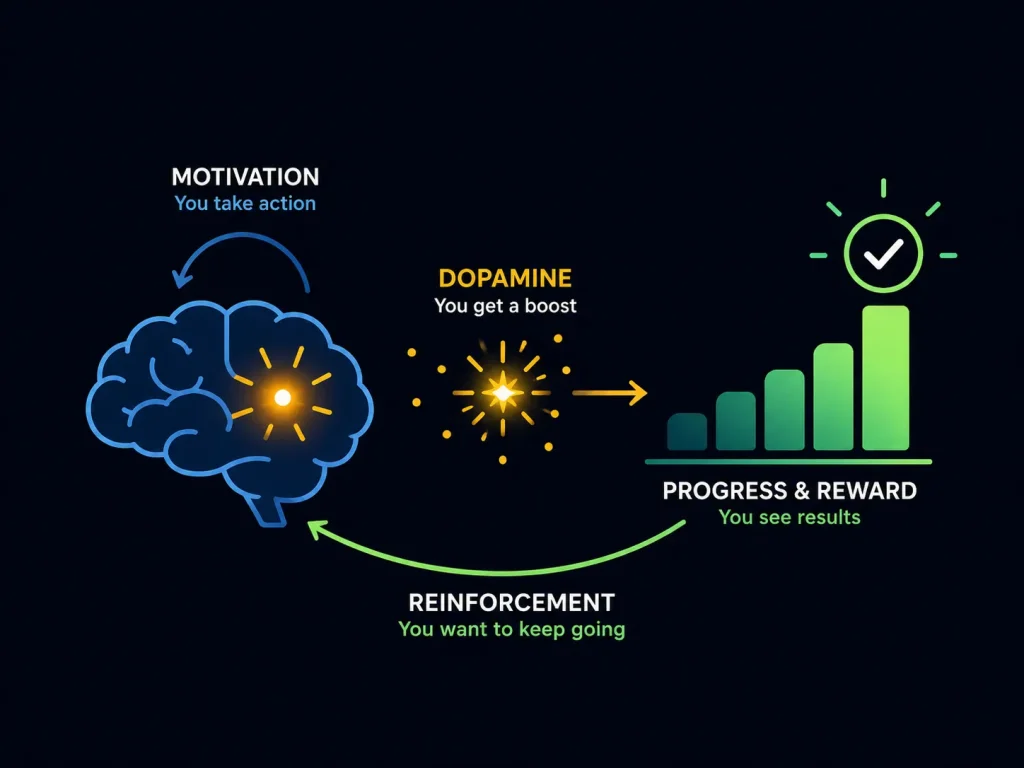
Points work because progress you can see is progress you’re more likely to repeat. When effort turns into a visible, quantified number, it satisfies the same completion-driven wiring that keeps people checking off to-do lists or watching a savings balance climb.
The research backs this up. One meta-analysis found gamified fitness interventions produced a small-to-medium effect on physical activity, and the effect held up even when compared against active control groups, meaning the gamification itself adds value on top of standard tracking features. Separately, a large-scale study of a health gamification system found that point-based rewards significantly increased activity levels, with the effect growing stronger for users who redeemed rewards more frequently.
In practice, that means an XP system isn’t just a cosmetic layer. It changes behavior, but only if the scoring holds up over time instead of losing meaning after the first few weeks.
Why Do Most Fitness XP Systems Stop Working?
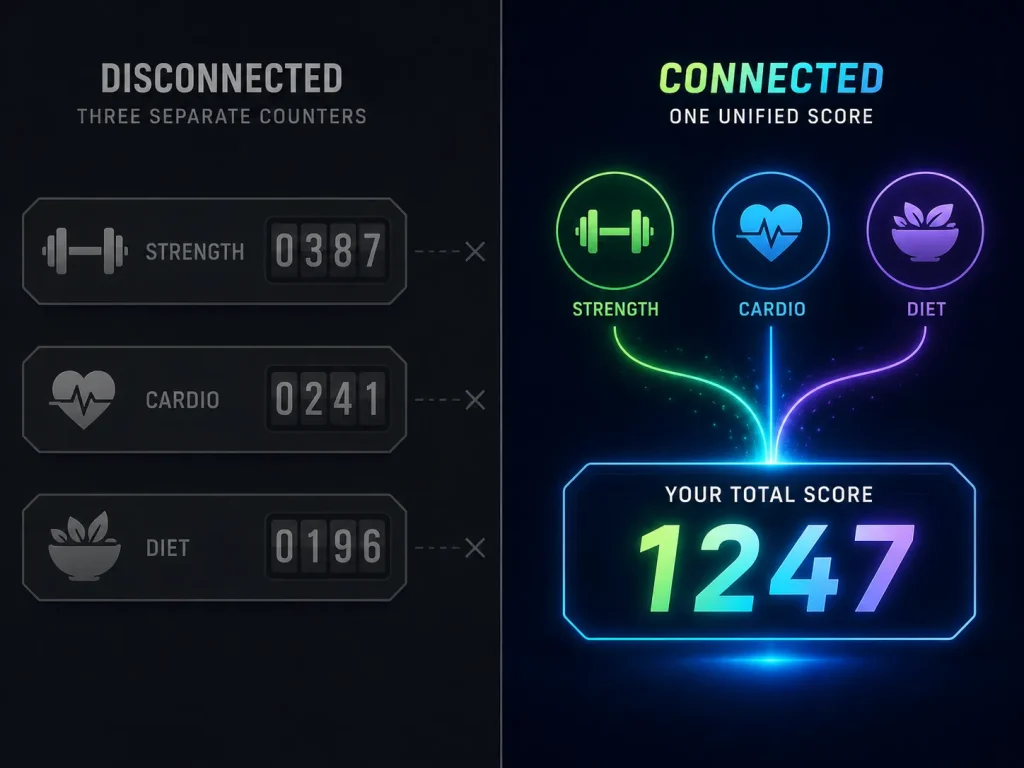
The usual failure point is fragmentation. Some apps split XP into separate currencies, for example one point type for overall level and a second point type tracked per muscle group, which asks you to manage two scoreboards instead of one. Others layer on multiple point currencies for different purposes, a structure that can work in a full video game but tends to overwhelm a fitness app.
The result is an XP system that feels impressive for a week and forgettable by week three, because you’re not sure which number actually reflects your overall effort. If your lifting XP, running XP, and nutrition XP live in three separate silos, none of them functions as a real measure of how your training is going.
How Does Rival Fit’s Unified XP System Work?
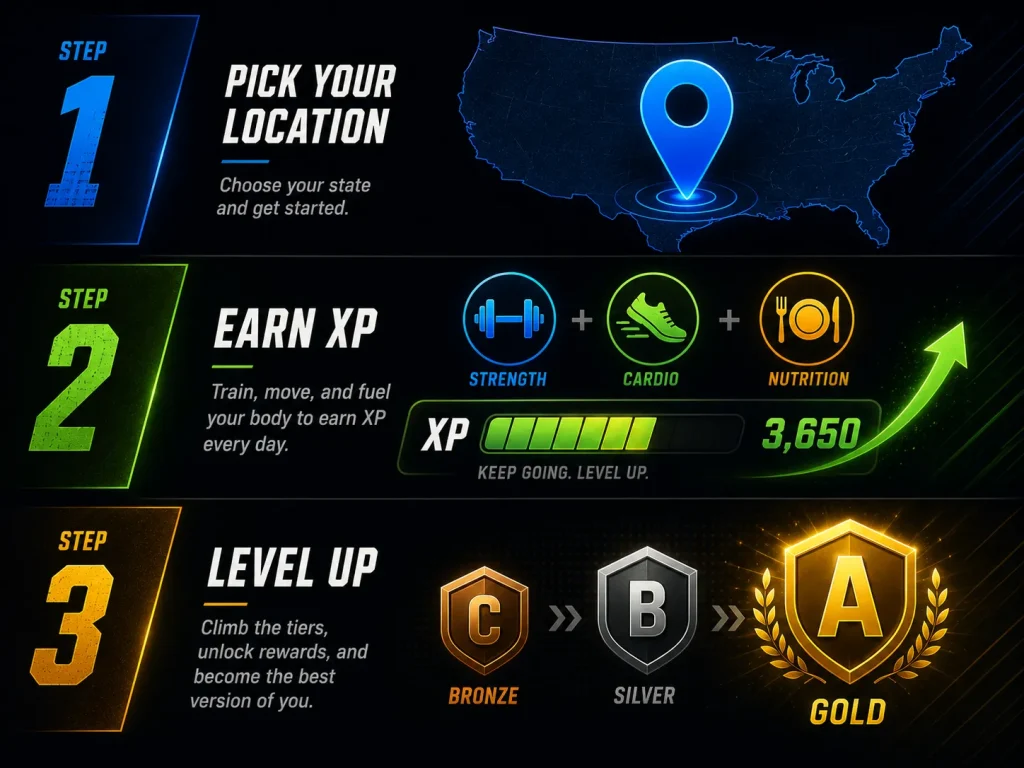
Rival Fit was built around a single combined score instead of separate counters, following the same three-step loop every time:
- Join Your State League. Signup places you in your state’s pool, starting in Tier C.
- Earn Unified XP. One score balances lifting, running, and nutrition discipline, instead of tracking them as three unrelated numbers.
- Climb the Ranks. You survive the weekly Monday reset and work your way toward Tier A.
That structure is what separates a real Unified XP System from a generic points tracker: your macros, your mileage, and your heaviest set all feed the same score, so a strong nutrition week can offset a lighter lifting week instead of vanishing into a separate tab nobody checks.
| Typical Fitness App XP | Rival Fit’s Unified XP | |
| What it tracks | One activity type (usually workouts only) | Lifting, running, and nutrition together |
| How it’s scored | Flat counter, no comparison context | One score, ranked against your state’s leaderboard |
| Reset cadence | Rarely resets, XP just accumulates forever | Monday reset keeps weekly effort meaningful |
| Where it shows up | A private profile screen | Your Tier C to Tier A position in your State League |
How Does the Monday Reset Keep XP From Losing Meaning?
A score that only ever goes up eventually stops motivating anyone, because old effort keeps padding the total long after it’s relevant. Rival Fit’s Monday reset re-evaluates your standing each week based on that week’s Unified XP, so last month’s big session doesn’t coast you through a week of doing nothing.
That weekly cadence is also what keeps your State League standings competitive instead of static. If you want the fuller psychology behind why streaks and resets work in the first place, our breakdown of gamifying your workout covers the mechanics in more depth.
Frequently Asked Questions
Does Rival Fit’s XP reset completely every week?
Your standing is re-evaluated at the Monday reset based on that week’s Unified XP, so consistency week over week matters more than one standout session months ago.
Can I earn XP from nutrition, not just workouts?
Yes. Macros & Nutrition is one of the three inputs to Unified XP, alongside the Workout Journal and Runner Log, so hitting your protein and carb goals contributes to the same score as your lifts and runs.
Do I need to be a competitive athlete to use an XP system like this?
No. The Free Agent plan is $0 a month and includes Unified XP, Prestige progression, and ghost rank, which compares you to your own past performance rather than a stranger’s, a lower-pressure entry point for beginners or older athletes.
What’s the difference between XP and rank?
XP is the score itself. Rank is where that score places you in your State League, from Tier C up to Tier A, relative to everyone else competing that week.
Is a Unified XP system better than separate points for each activity?
It depends what you want out of it. Separate counters can highlight one specific skill, but a unified score gives you one honest number for how your training is actually going across lifting, running, and nutrition combined, without needing to check three different screens.
The Bottom Line
An XP system is only as useful as what it actually measures. A flat counter that never resets and only tracks one activity fades into background noise within a few weeks. A system built around one combined score, weekly stakes, and real ranking against other people is a different thing entirely.
That’s the bet behind Rival Fit’s Unified XP: lifting, running, and nutrition feeding one number, a Monday reset that keeps it honest, and a State League that turns your training into something with a leaderboard, not just a log. Claim your spot before your state fills.