
Quick Answer: The best accountability partner is usually someone you already know who trains at times that overlap yours, is a little ahead of you, and reliably shows up. If you don’t have one, look in classes, run clubs, workplaces, and community groups, or use an app. In a 1999 trial, 95 percent of people who joined a weight-loss program with friends finished it, versus 76 percent of those who joined alone, though that study wasn’t about exercise and compared its weakest and strongest setups. Lab studies find a moderately more capable partner drives more effort, and an app can fill the gap when a person isn’t available, though one study found software partners motivated less than people.
An accountability partner is someone who expects you to show up. That’s the whole mechanism. When nobody’s waiting for you, skipping costs nothing. When someone is, it costs a little, and that small cost is often enough.
Most advice stops at “find a buddy.” This post covers whether it works, who to pick, where to look, how to ask, how to keep it going, and when an app does the job better than a person.
Does a Workout Accountability Partner Actually Help?
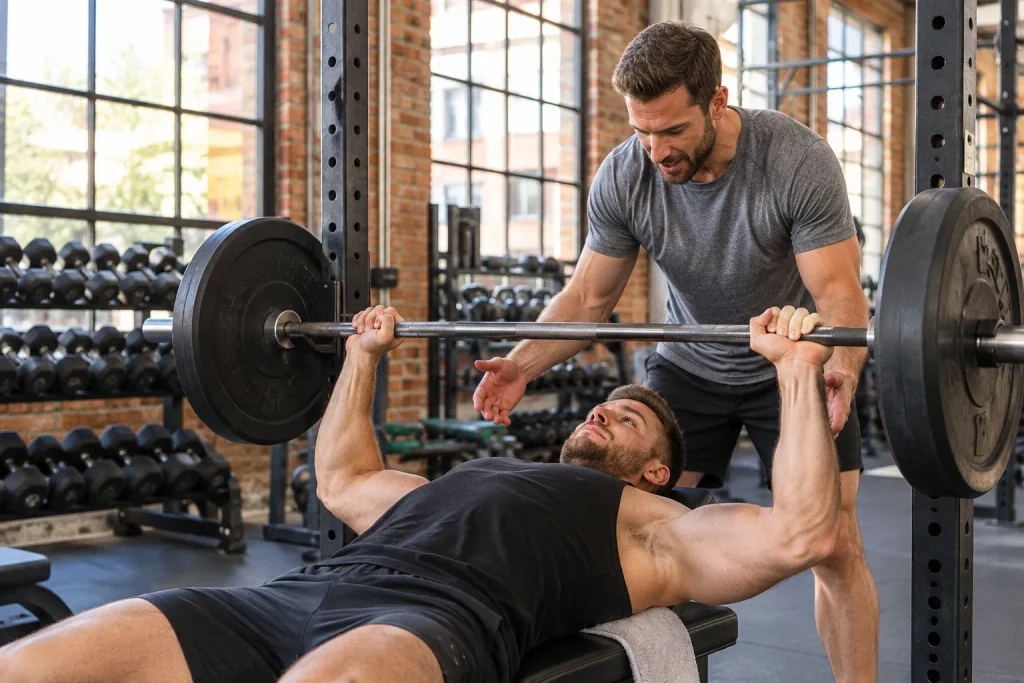
The evidence points the right way, with caveats. In a 1999 trial, 166 adults joined a weight-loss program either alone or with three friends or family members. Among those who joined alone, 76 percent finished and 24 percent maintained their weight loss. Among those who joined with friends and got extra social support, 95 percent finished and 66 percent maintained it. That study was about weight loss, not exercise, and it compares the weakest setup with the strongest.
For exercise itself, a meta-analysis of 19 studies (1,912 participants) found that people put in more effort when working out alongside a partner than alone. Most of those studies were short lab tasks, so they show effort within a session, not whether you’ll turn up for months. Taken together, a partner helps, and how much for you is unproven.
Who Makes a Good Accountability Partner?

One finding is research-based. The rest are common-sense suggestions.
1. Someone a little ahead of you. In a lab study of 176 college students, a software partner who was moderately better than the participant was more motivating than one who was much weaker or much stronger. A partner you can’t hope to match may just make you feel behind.
2. Someone whose schedule overlaps yours. A great partner you can only meet once a month isn’t much of a partner.
3. Someone with a similar goal. A lifter and a marathon trainer can still check in, but they’ll find it harder to train together.
4. Someone reliable. Reliability beats enthusiasm. Pick the person who shows up, not the one who’s most excited.
5. Someone supportive. You want a person who says “see you Thursday,” not one who keeps score of your misses.
Where Can You Find One?
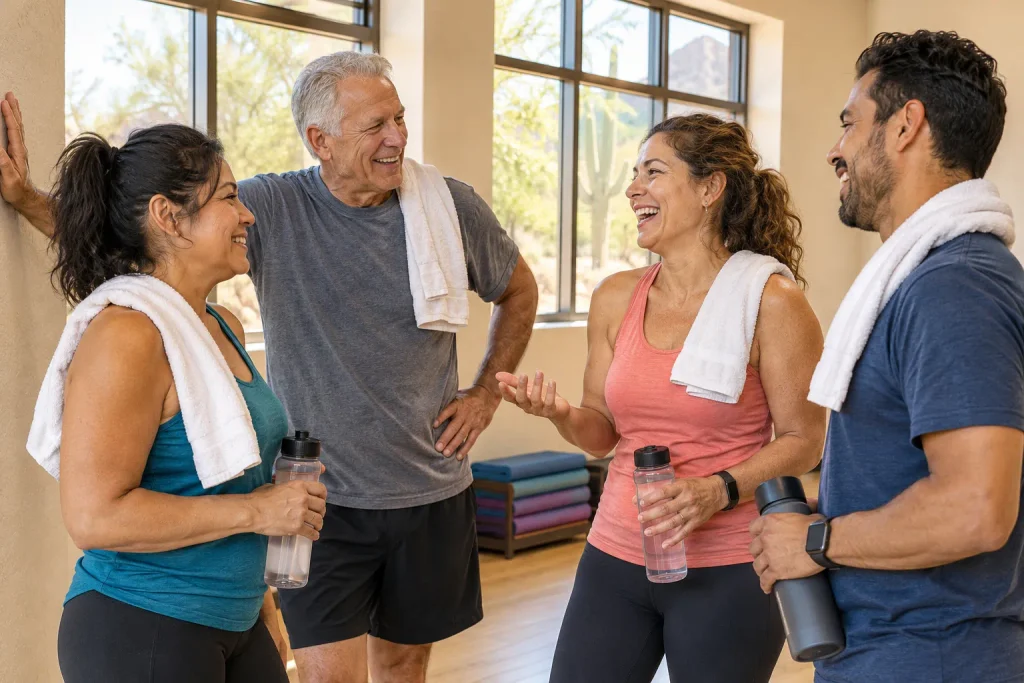
1. People you already know. Friends, family, neighbors, and coworkers. Ask someone directly, with a specific plan.
2. Classes and group fitness. Regulars see the same faces each week, and a standing class slot is easy to share.
3. Clubs and leagues. Running, walking, lifting, cycling, and recreational sports groups have people looking for company.
4. Community programs. Senior centers and parks departments run classes and groups. For readers over 60, our guide to senior fitness communities and groups names verified options, and our hub on staying active after 60 puts them in context.
5. Online communities and apps. Useful when nobody nearby fits your schedule or goals.
How Do You Ask, and What Should You Agree On?
Be specific and small. “Want to work out sometime?” fades out. “Want to lift Tuesday and Thursday at 6:30 for three weeks, then decide?” is easy to say yes to, and easy to end gracefully.
Agree on four things up front: the days and times, what counts as a no-show, how to cancel (a text the night before, not an hour before), and what each of you will do alone if the other cancels. This is practical advice, not research, but it removes a lot of guesswork.
How Do You Keep It Going?
Have a fallback. If your partner cancels, do a minimum session alone instead of skipping. That’s the all-or-nothing trap we cover in why do I keep skipping workouts, and a partner can make it worse if you start skipping whenever they do.
Check in weekly, briefly: what worked, what didn’t, what’s next. And give it time. Habits take months, not weeks, as we explain in how long it takes to build a workout habit, so judge the arrangement after a few weeks, not a few days. If it isn’t working, say so kindly and find a better fit.
When Is an App a Better Partner Than a Person?
| Your Situation | A Person Fits Better When | An App or League Fits Better When |
| Schedule | Your times line up with someone | Your schedule changes week to week |
| Technique and safety | You want someone who can watch your form | You only need tracking and a nudge |
| Comfort | You enjoy company in the room | You’re self-conscious or want privacy |
| Motivation style | A person’s expectation moves you | A score or rank moves you |
| Reliability | You have a dependable friend | The people you know cancel a lot |
There’s one honest caveat. Research on software partners shows they can produce an effort boost, but in one study it was weaker than with a partner believed to be human. An app can be a good second-best, not a guaranteed equal.
How Does Rival Fit Fit In?

Rival Fit’s Social Feed lets you scout rivals, post your PRs, and follow the competition. Custom Leagues and League vs League, part of the Pro Athlete plan ($9.99 per month), let a group you choose compete together, which is a structured way to hold each other accountable. We cover friendly formats in how to compete with friends at the gym. The free Free Agent tier ($0) includes ghost rank, where your partner is your past self.
Here’s what the site doesn’t say. It doesn’t describe matching you with a partner, messaging between members, or how leagues get formed, so you’d bring your own people. Scoring runs on Unified XP, which counts lifting, running, and nutrition, and the site doesn’t say how walking is scored. Competition isn’t for everyone, and a ranking can add pressure instead of support. The app is also in beta with waitlist access, with leagues opening first in Florida, Texas, and New York.
Frequently Asked Questions
Does an accountability partner really work?
Evidence suggests it helps. In a 1999 trial, 95 percent of people who joined a weight-loss program with friends finished, versus 76 percent of those who joined alone, and a meta-analysis found more effort in partnered exercise. Most of the exercise research is short lab tasks, so treat it as a good bet, not a guarantee.
How do I find a gym buddy if I don’t know anyone?
Try group classes, running or lifting clubs, community programs, and online communities. Regulars in the same class at the same time are the easiest people to ask.
What makes a good workout partner?
Someone a little ahead of you, with a schedule that overlaps yours, a similar goal, and a record of showing up. Reliability matters more than enthusiasm.
What if my partner keeps canceling?
Have a fallback so you still train, and raise it kindly. If it keeps happening, look for a partner who fits better or switch to a league or app.
Can an app be my accountability partner?
Yes, especially when your schedule is unpredictable or you prefer privacy. Software partners can boost effort, though in one study not as strongly as a person.
Someone Is Expecting You
Accountability comes down to one thing: somebody who notices when you don’t show up. Choose someone a little ahead of you who’s reliable, agree on the basics, and keep a fallback for the days they can’t. If no one fits, a league or an app is a reasonable second choice.
Want a group you choose to compete with, or a scoreboard that compares you with your past self? Claim your spot and start with Free Agent when your state’s beta opens.