
Quick Answer: Fitness gamification works because it satisfies three psychological needs behind all human motivation: competence (visible proof you’re improving), autonomy (choosing your own path to a goal), and relatedness (feeling connected to other people working toward the same thing). Points and badges alone don’t do much on their own research shows their effect fades once the novelty wears off. What sustains behavior change is a system that keeps showing you progress, keeps you in control, and keeps you around other people. That’s the design problem Unified XP was built to solve.
The Question Nobody Answers Honestly: Does Gamification Actually Work?
Search “gamified fitness app” and you’ll find no shortage of blog posts insisting that points and badges are basically magic. They’re not. The actual research is more interesting, and more useful, than that.
A meta-analysis of gamified learning environments found that gamification does raise intrinsic motivation, along with people’s sense of autonomy and relatedness but its effect on people’s sense of competence was surprisingly small. Intrinsic motivation is widely considered one of the most important psychological concepts in this area, and the finding matters because it tells you which specific game mechanics are doing the real work, and which are decoration.
Separately, a controlled study using the fitness platform Fitocracy found that researchers found that gamification improved not just how people felt about exercise, but their actual exercise behavior people gamifying their workouts moved more, not just enjoyed it more. That distinction, feeling versus doing, is the whole ballgame for a product like Rival Fit. A leaderboard that just feels fun but doesn’t change what you do on a Tuesday morning isn’t gamification. It’s decoration.
The Real Psychology: Self-Determination Theory
Most of the credible research in this space, from physical education studies to app-design research, keeps landing on the same framework: Self-Determination Theory (SDT). SDT holds that motivation exists on a continuum from intrinsic (doing something because it is inherently satisfying) to extrinsic (doing it for an outcome), and that long-term behavior change depends on intrinsic motivation taking over from short-term extrinsic pushes.
That splits gamification into three levers:
1. Competence “Am I actually getting better?”
This is the one most fitness apps get wrong. A generic step counter tells you a number went up. It doesn’t tell you whether that number means anything. Competence isn’t raw data, it’s contextualized progress: where you stood last week, where you stand today, and what rank that earns you against people at your level.
2. Autonomy “Is this my path, or someone else’s?”
Rigid programs kill motivation fast, especially for people who don’t want to be told exactly what to do every day. The strongest systems give people a goal (climb the rank) and let them choose the route (lift, run, eat well, or some mix).
3. Relatedness “Am I doing this with people, or alone?”
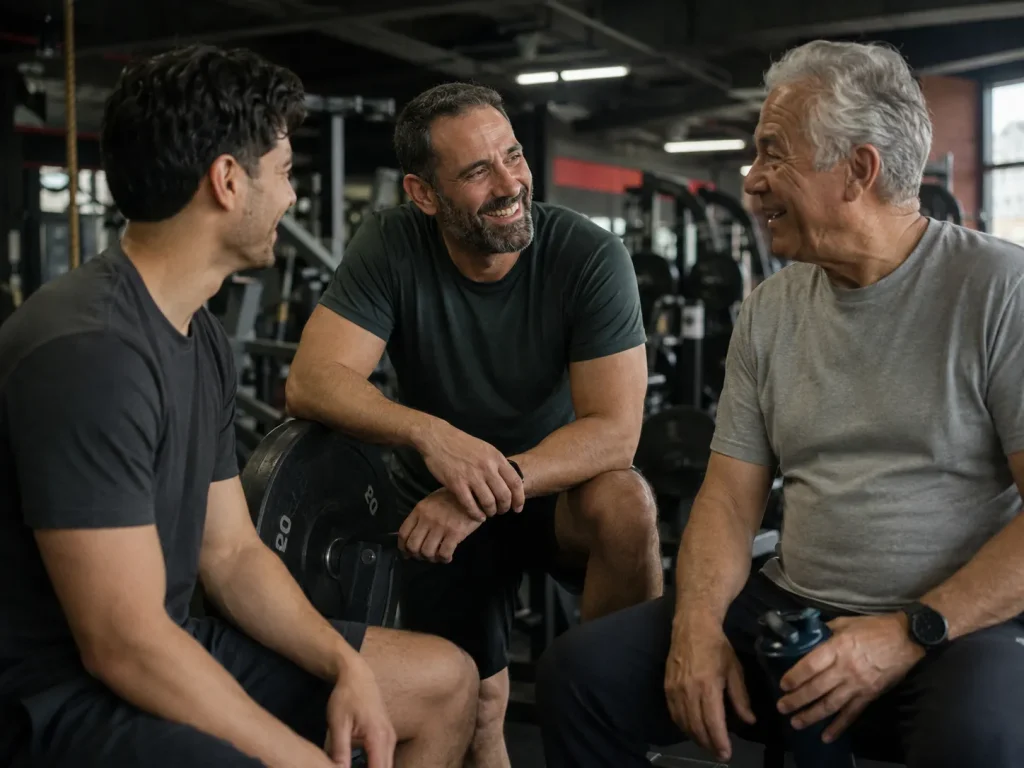
This is the piece most solo tracking apps skip entirely, and it’s arguably the biggest lever. Isolation is one of the most common reasons people quit a fitness routine. A private, personal log has nothing pulling you back in on the day you don’t feel like training.
Why Points and Badges Alone Don’t Work (And What Does)
Here’s the part most “top 10 gamified fitness apps” listicles skip: badges and points, by themselves, are weak motivators. One widely cited finding on fitness-app leaderboards notes that leaderboards work by highlighting comparisons and stimulating competition, showing users where they rank relative to their peers but that same research flags a real design problem: app designers have to find ways to motivate every user, not just the top performers, keeping people engaged even when they have fallen behind.
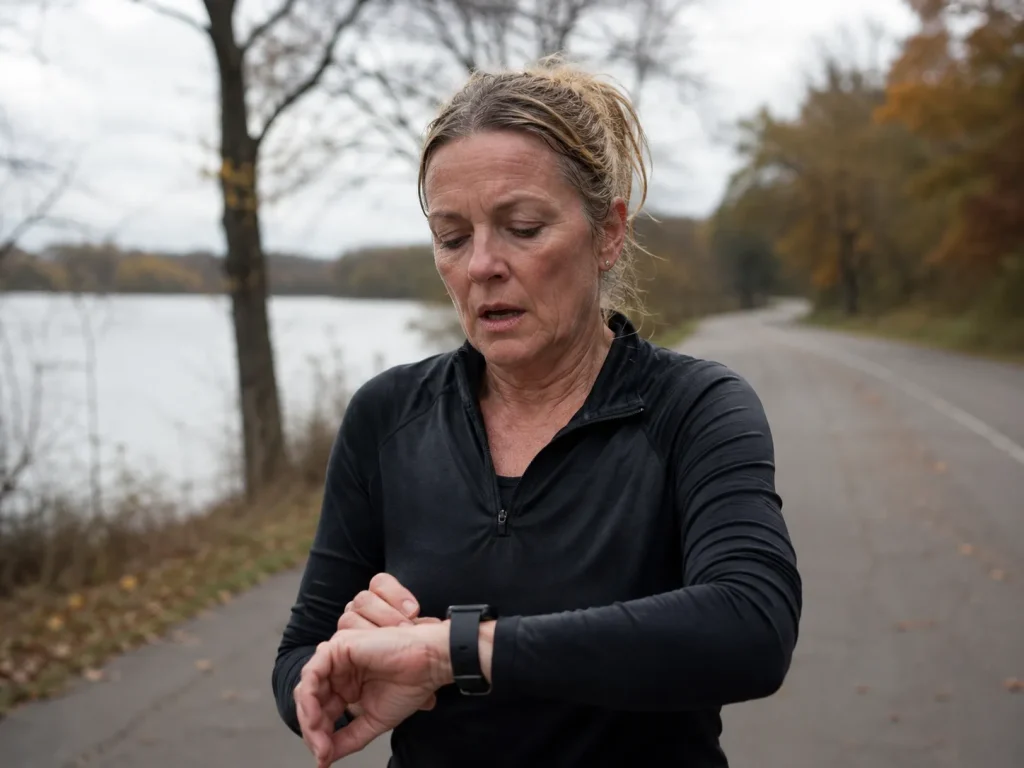
That’s the exact failure mode of naive gamification. A single global leaderboard motivates the top 5% and demoralizes everyone else. Most gamified fitness apps never solve this. They bolt a leaderboard onto a tracking app and call it done.
The Rival Fit Angle: One Score, Not Three Separate Games
Most competing apps treat streaks, points, and leaderboards as separate features stapled onto a tracker. Rival Fit’s actual design starts from the opposite assumption: lifting, running, and nutrition discipline all feed into one number.
Here’s how that plays out inside the app:
- Join Your State League signup places you in your state’s pool, starting in Tier C, not the open internet, but a pool sized to your actual competition.
- Earn Unified XP one combined score for lifting, running, and nutrition discipline, so a strong nutrition week counts for something even if your lifting numbers plateau.
- Climb the Ranks the Monday reset means competence has to keep being re-earned; nobody coasts on a badge they collected three months ago.
This directly answers the “demotivated bottom of the leaderboard” problem the research flags. Because ranking happens inside your state tier, not a global list of every user on the platform, you’re never being compared against someone three years into their training. And because ghost rank lets Free Agent users compete against their own past performance instead of strangers, the on-ramp doesn’t require being competitive with anyone yet.
The autonomy piece shows up in the Unified XP design too: someone who can’t run this week because of an injury isn’t locked out of climbing, their nutrition and lifting numbers can still carry their score.
What This Means If You’re Choosing a Fitness App for the Psychology, Not Just the Features
If you’re evaluating gamified fitness apps and actually care whether the mechanics will hold up past week three, ask one question: does the system reward you for showing up, or only for performing well? Systems that only celebrate elite output lose everyone except the people already winning. Systems built around consistent, contextualized progress, inside a peer group sized to your level, are the ones people stick with.
That’s the design bet behind Unified XP: not points for the sake of points, but one score that reflects the whole picture of your training, inside a competitive pool that’s actually fair to compete in.
FAQ
Does gamification actually improve fitness results, or just make apps more fun to use?
Both, according to controlled research one study found gamified exercise platforms increased actual exercise behavior, not just enjoyment.
Why do some people lose interest in gamified apps after a few weeks?
Usually because the app relies on points and badges alone, which fade in effect once the novelty wears off, instead of tapping the deeper psychological needs (competence, autonomy, relatedness) that sustain long-term motivation.
Are leaderboards demotivating?
They can be, for anyone who feels permanently behind. The fix isn’t removing the leaderboard, it’s sizing the competition (by state, by tier, or against your own past performance) so the comparison stays fair.
What makes Unified XP different from a typical points system?
It combines lifting, running, and nutrition discipline into a single score instead of tracking them as separate, disconnected metrics, so progress in one area still moves your rank even when another area stalls.